Every parent remembers that moment of heart-stopping panic—you turn your back for two seconds, and suddenly your toddler is halfway up the bookshelf, reaching for something they absolutely shouldn’t have. You rush over, crisis averted, and think, “I need to do something about that.”
Here’s the thing about child safety: the best intervention is the one that never has to happen.
As a firefighter who’s responded to countless preventable childhood accidents over 34 years, I can tell you that most serious injuries happen in scenarios parents never imagined. The good news? With proper childproofing, you can eliminate the vast majority of these dangers before they ever become emergencies.
Understanding Child Development and Risk
Before we dive into specific safety measures, it’s crucial to understand how children explore their world:
Infants (0-12 months): Everything goes in the mouth. They roll, reach, and grab before you expect them to.
Toddlers (1-3 years): Climbing, opening, and investigating become full-time jobs. They have no concept of danger.
Preschoolers (3-5 years): They can open “childproof” containers, operate doorknobs, and climb surprisingly high.
The key is to childproof before your child reaches each developmental stage, not after they’ve already demonstrated the ability.
Room-by-Room Childproofing Guide
Kitchen: The Most Dangerous Room
The kitchen combines heat, sharp objects, chemicals, and choking hazards—a perfect storm of danger.
Priority Actions:
- Lock cleaning supplies – Use childproof locks on cabinets containing cleaning products, dishwasher detergent, and other chemicals
- Secure the oven – Install an oven lock to prevent curious hands from opening a hot oven
- Turn pot handles inward – Always turn handles toward the back of the stove
- Lock knife drawers – Magnetic locks work better than simple latches
- Secure the refrigerator – Fridge locks prevent midnight snack adventures that can end in spills or worse
Often Overlooked: Small appliances with cords can be pulled down, dishwasher detergent pods are attractive and deadly, and trash cans contain countless hazards.
Bathroom: Hidden Hazards
Drowning can happen in as little as two inches of water, and bathrooms contain medications and chemicals that can poison curious children.
Priority Actions:
- Toilet locks – Yes, they’re annoying for adults, but drowning prevention is worth the inconvenience
- Medicine cabinet locks – Move all medications, including vitamins, to high, locked cabinets
- Water temperature – Set your water heater to 120°F maximum to prevent scalding
- Non-slip mats – Both in the tub and on the bathroom floor
- Electrical outlet covers – Especially important near water
Critical Rule: Never leave a child unattended in the bathroom, even for “just a second.”
Living Areas: The Overlooked Dangers
We think of living rooms as safe spaces, but they contain numerous hazards:
Priority Actions:
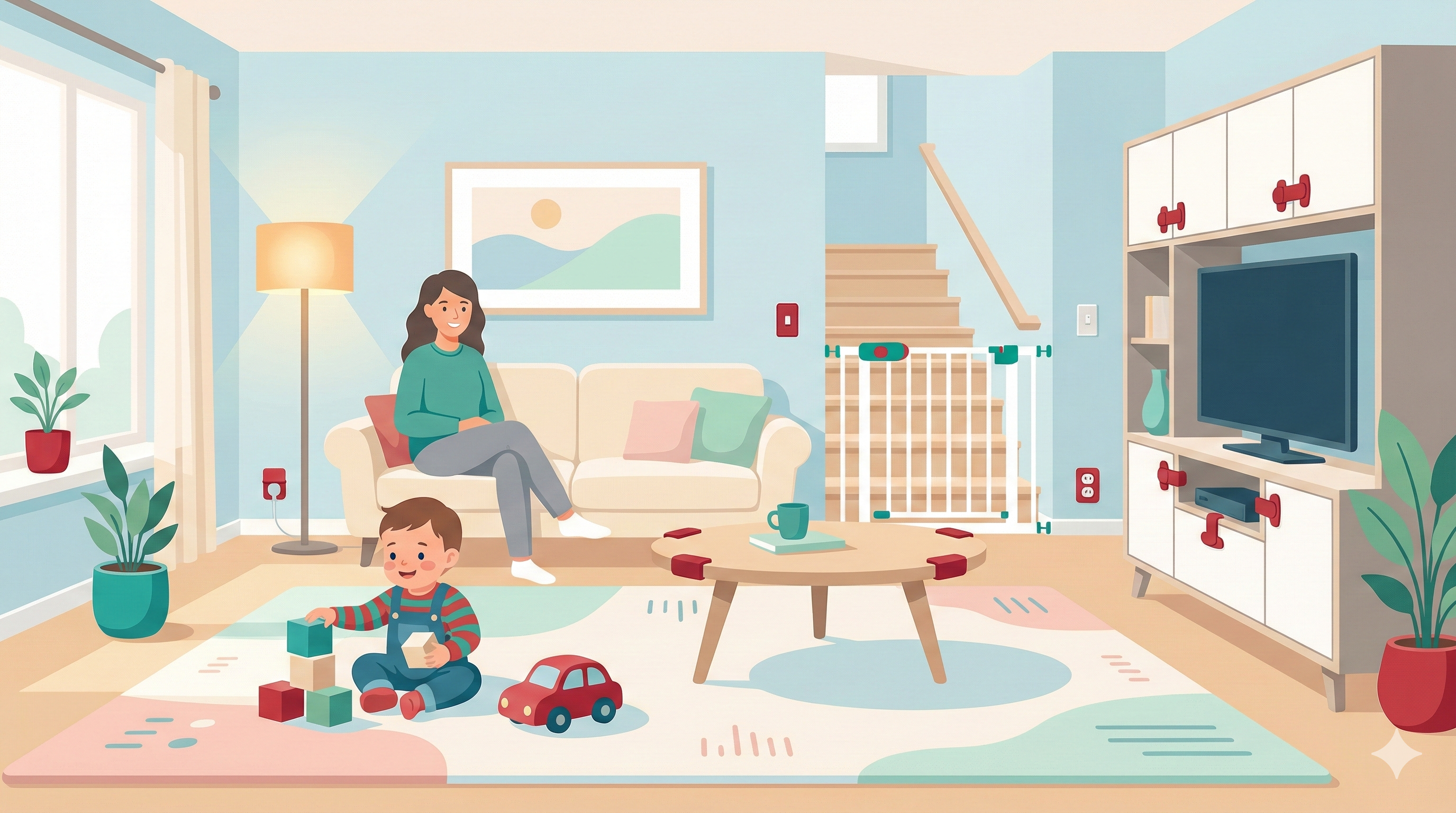
- Furniture anchoring – Secure bookcases, dressers, and TVs to walls. Tip-over accidents kill children every year
- Outlet covers – Cover all unused electrical outlets
- Corner guards – Protect sharp furniture corners, especially at head height
- Cord management – Window blind cords and electrical cords pose strangulation risks
- Fireplace barriers – Install gates around fireplaces and wood stoves
Often Overlooked: Small decorative items can be choking hazards, and house plants may be poisonous.
Stairs and Hallways
Falls are the leading cause of non-fatal injuries for children under 5.
Priority Actions:
- Safety gates – Install at both the top and bottom of stairs
- Handrail height – Ensure railings are the appropriate height and balusters are close together
- Non-slip treads – Especially important for homes with hardwood stairs
- Night lights – Adequate lighting prevents nighttime falls
Bedrooms: Safe Sleep Spaces
For Infants:
- Crib mattress fits snugly with no gaps
- No pillows, blankets, or stuffed animals for babies under 1 year
- Crib slats no more than 2⅜ inches apart
- Drop-side cribs should never be used
For Toddlers:
- Window guards or stops prevent falls
- Furniture away from windows
- Toy chests with slow-closing hinges and air holes
Beyond Physical Barriers: Creating Safety Systems
Poison Prevention
Every year, poison control centers receive millions of calls about child poisonings.
- Save Poison Control number: 1-800-222-1222
- Keep syrup of ipecac on hand ONLY if poison control directs you to use it
- Store all medications in original containers with childproof caps
- Lock away vitamins—children think they’re candy
Fire and Burn Prevention
- Install smoke detectors on every level and test monthly
- Keep fire extinguishers accessible
- Create and practice a fire escape plan
- Set the water heater to 120°F maximum
Choking Hazard Awareness
Children under 4 shouldn’t have access to:
- Foods: grapes (whole), hot dogs (unless cut lengthwise), popcorn, hard candy, nuts
- Objects: coins, small toy parts, button batteries, balloons
The “toilet paper roll test”: If an object fits through a toilet paper tube, it’s a choking hazard.
Age-Appropriate Adjustments
Childproofing isn’t one-and-done. As children grow, reassess:
Every 6 months: Get down on hands and knees and view the world from your child’s perspective. What can they reach now that they couldn’t before?
Before developmental leaps: Childproof for abilities they’re about to develop, not the ones they have now.
When moving or visiting: New environments require fresh assessment.
The Most Important Safety Measure
All the childproofing in the world can’t replace active supervision. The combination of proper childproofing AND attentive parenting creates the safest environment.
Think of childproofing as your safety net—it catches the moments when supervision inevitably has gaps.
Common Childproofing Mistakes
- Waiting too long – Install safety measures before your child can exploit hazards
- Inconsistency – Childproofing at home but ignoring grandparents’ houses
- False confidence – “Childproof” doesn’t mean “childproof enough.”
- Forgetting updates – Safety measures need adjusting as children grow
Take Action Today
Start with the highest-risk areas: kitchen chemicals, medication storage, furniture anchoring, and outlet covers. You don’t have to do everything in one day, but you do need to start.
Need help assessing your home’s safety? Our Pediatric First Aid & CPR courses include childproofing guidance and teach parents how to respond when prevention fails. Because the best safety plan includes both prevention and preparedness.
Ready to create a safer home environment? Contact us about our Pediatric First Aid courses that combine prevention education with life-saving skills. Call (707) 688-5300 or check our course calendar today.
Ready to Get Certified?
From individual CPR to full ACLS/PALS provider courses, we have the class for you. Reach out today to book your spot or inquire about our on-site training options.