It’s 10:30 AM on a Tuesday. Your colleague Mike is getting coffee when he suddenly clutches his chest and collapses. Someone calls 911. Average EMS response time in your area? 8-12 minutes.
Here’s the brutal truth: For every minute without CPR and defibrillation, Mike’s chance of survival drops by 10%. By the time paramedics arrive, his odds could be nearly zero—even with the best emergency response system in the world.
This is why businesses across America are investing in Automated External Defibrillators (AEDs) and the training to use them. It’s not just about compliance or liability—it’s about creating workplaces where people go home to their families at the end of the day.
What Is an AED and How Does It Work?
An Automated External Defibrillator is a portable device that analyzes heart rhythms and delivers an electric shock to restore normal heartbeat during sudden cardiac arrest. Modern AEDs are designed for use by anyone—even people with no medical training.
The Technology That Saves Lives
Here’s what makes AEDs so remarkable:
Voice Prompts: The device literally tells you what to do, step by step.
Safety Features: The AED won’t deliver a shock unless it’s needed. You can’t accidentally harm someone.
Simplicity: Place pads on the chest, press the analyze button, and follow instructions. That’s it.
The technology has become so reliable and user-friendly that thousands of lives are saved each year by bystanders who’d never seen an AED before the emergency happened.
The Sobering Statistics
Every year in the United States:
- Over 350,000 cardiac arrests occur outside of hospitals
- Only about 40% of victims receive bystander CPR
- Fewer than 12% of victims receive defibrillation before EMS arrives
- Survival rates average just 10% nationally
But here’s the hopeful part: When bystanders perform CPR and use an AED before EMS arrives, survival rates can exceed 50%.
The math is simple and stark. Having an AED on-site and people trained to use it can literally be the difference between life and death for your employees, customers, and visitors.
Legal Requirements and Liability Protection
Does the Law require an AED?
Requirements vary by state and industry. Some states mandate AEDs in:
- Health clubs and fitness centers
- Schools and universities
- Large office buildings
- Public venues
Even if your state doesn’t require an AED, having one demonstrates your commitment to employee safety and can provide legal protection under Good Samaritan laws.
Good Samaritan Laws Protect Rescuers
All 50 states have Good Samaritan laws that protect individuals who use AEDs in good faith during emergencies. Additionally, the federal Cardiac Arrest Survival Act provides liability protection for AED use in the workplace.
Bottom line: You’re far more likely to face legal questions for NOT having an AED than for having one and using it properly.
Beyond the Device: The Critical Role of Training
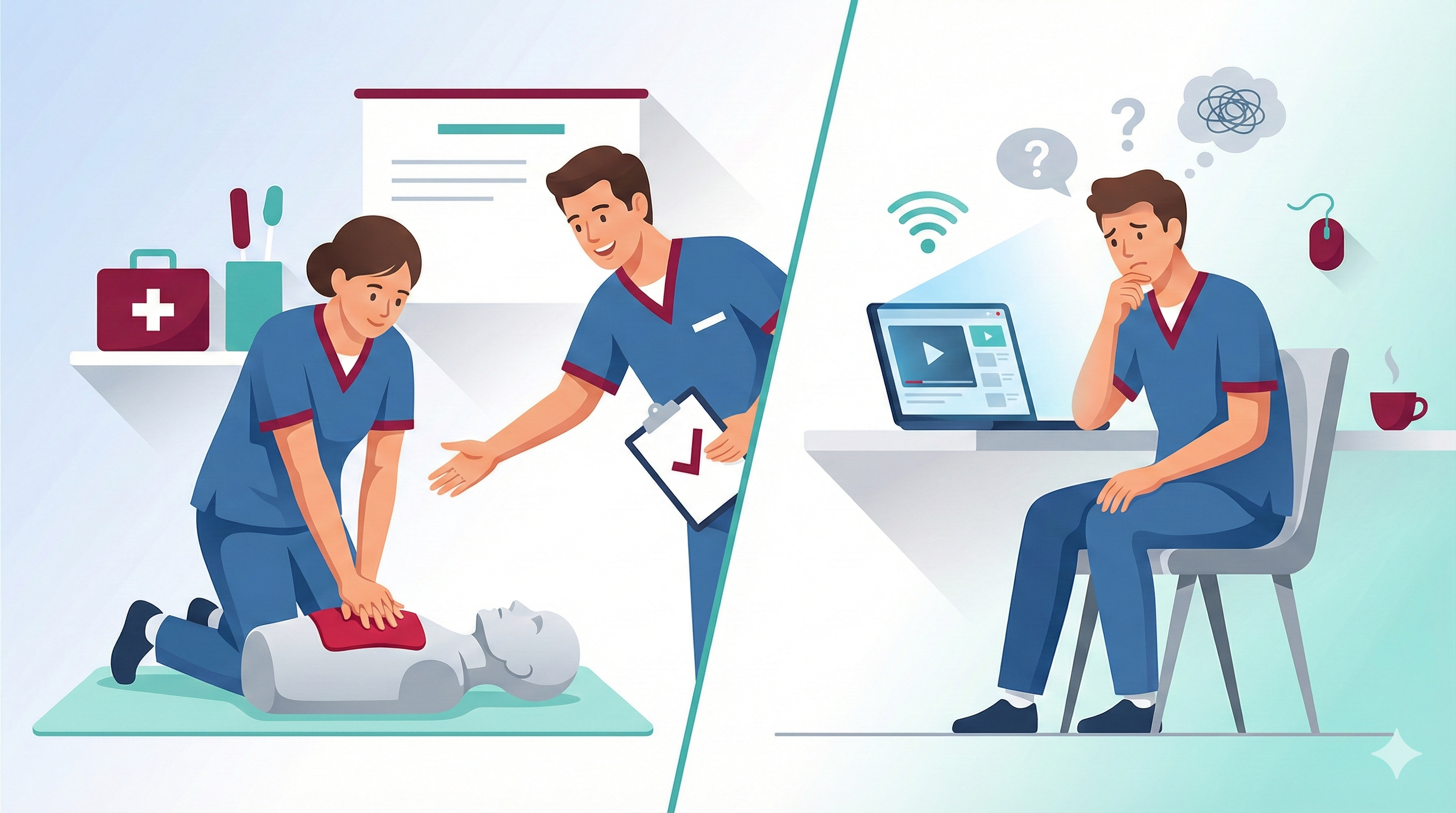
Here’s a scenario we see too often: A company buys an AED, mounts it on the wall, and considers the job done. When an emergency happens, people freeze because no one knows how to use it.
An AED on the wall is useless if no one feels confident using it.
What Proper AED Training Covers
Quality training programs teach:
- Recognition of cardiac arrest – How to identify when someone needs help
- Calling for help – Activating emergency response while beginning care
- Effective CPR – Keeping blood flowing until the AED arrives
- AED operation – Placing pads, analyzing rhythm, delivering shocks
- Team coordination – Working together during chaotic emergencies
The goal isn’t just knowledge—it’s confidence. When people have practiced with an AED trainer and received expert feedback, they don’t hesitate when seconds count.
Choosing the Right AED for Your Workplace
Not all AEDs are created equal. Consider:
Ease of Use: Look for clear voice prompts and visual instructions
Maintenance Requirements: Some models have longer-lasting batteries and pads
Durability: If your workplace has temperature extremes, choose accordingly
Training Mode: Some AEDs include training capabilities built in
Cost: Prices range from $1,200 to $2,500, but the investment pales in comparison to a life saved
Strategic Placement Matters
Place AEDs where they can be accessed within 3 minutes from anywhere in your facility. High-traffic areas, near elevators, or in central locations work best. Make sure they’re clearly marked with signage and that all employees know where they’re located.
Building a Culture of Preparedness
The most successful workplace safety programs go beyond equipment:
Regular Training: Annual refresher courses keep skills sharp and confidence high
Practice Drills: Scenario-based practice prepares teams for real emergencies
Clear Communication: Everyone should know who’s trained and where AEDs are located
Leadership Buy-In: When executives prioritize safety training, employees take it seriously
The Return on Investment
Let’s talk dollars and cents. An AED costs $1,200-$2,500. Training for 10-15 employees costs a few hundred dollars annually.
Now consider: What’s the cost of losing a valued employee? The productivity impact? The emotional toll on your team? The potential litigation?
The ROI of workplace AEDs isn’t measured in dollars—it’s measured in lives.
Real Stories, Real Impact
Over three decades of teaching CPR and AED use, I’ve heard countless stories of workplace saves. The administrative assistant who saved her boss. The warehouse supervisor who saved a delivery driver. The receptionist who saved a client.
These weren’t medical professionals. They were ordinary people who had training and access to an AED when it mattered most.
Take Action Today
If your workplace doesn’t have an AED, start the conversation today. If you have one but your team isn’t trained, schedule training this month. If you’re already doing both, thank you—you’re creating a workplace where people can count on each other when it matters most.
Ready to protect your workplace? Contact us to discuss AED options and schedule comprehensive training for your team, because the best time to prepare for an emergency is before one happens.
Have questions about workplace AED programs? Call us at (707) 688-5300 or visit our course calendar to schedule training. We’ll help you build a culture of preparedness that could save a life.
Ready to Get Certified?
From individual CPR to full ACLS/PALS provider courses, we have the class for you. Reach out today to book your spot or inquire about our on-site training options.